

One of the questions we often hear from patients at Komi Dental Center is: “If I have a tooth removed, can it damage my eyesight?”
The answer is simple and based on science: no, tooth extraction does not directly affect vision.
This is an old popular misunderstanding and it has no anatomical or clinical basis when the procedure is performed in professional conditions.
Teeth and eyes are separate systems

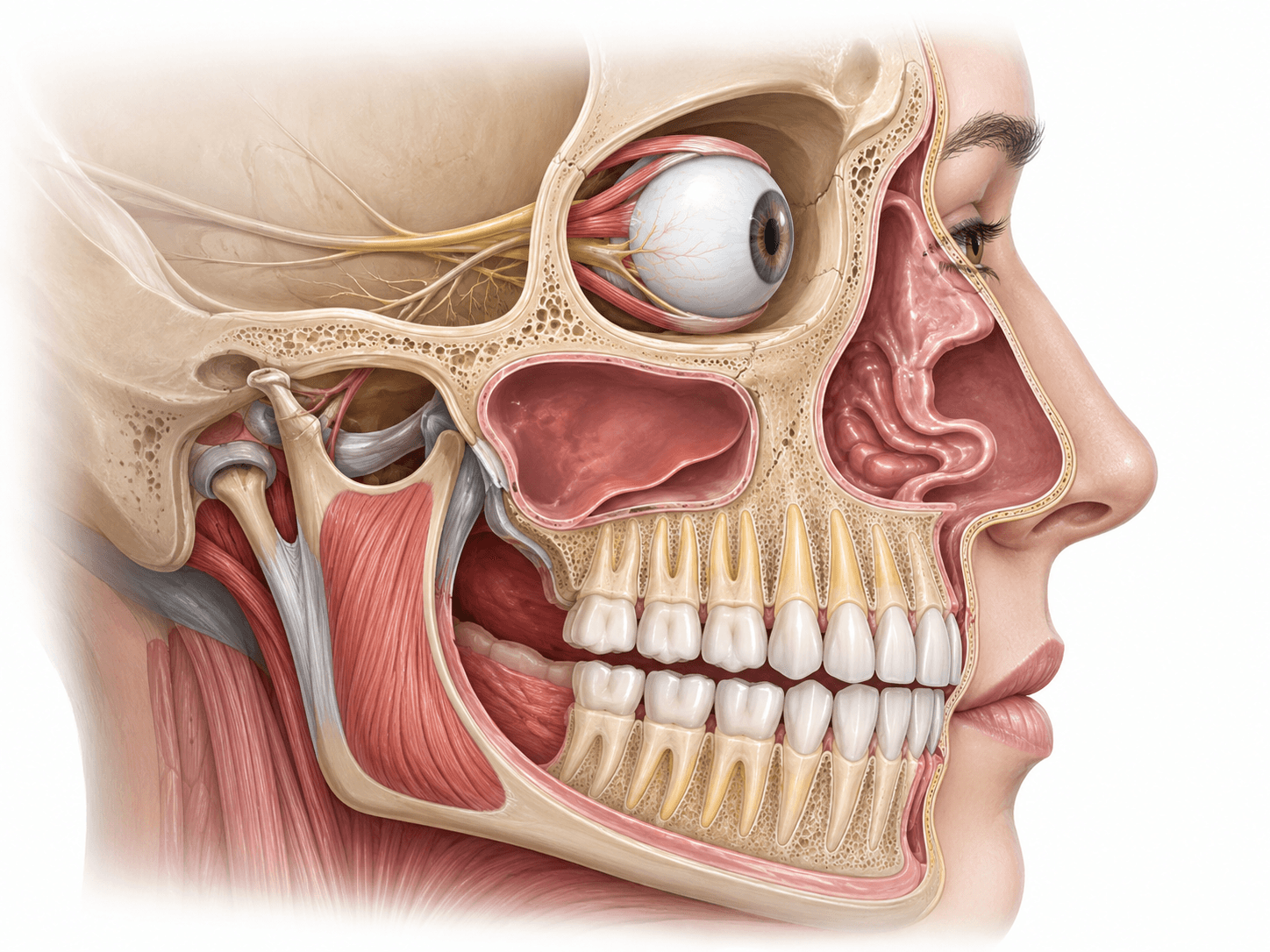
From a medical point of view:
- Teeth and jaws are mainly connected with the trigeminal nerve, which carries sensation from the face, teeth, and jaws.
- Vision is controlled by the optic nerve, which sends visual information from the eye to the brain.
- These two nerves do not share a function that would allow a tooth extraction to damage eyesight.
So when a dentist removes a tooth, the procedure does not touch the optic nerve, does not touch the eye, and does not change visual function.
What really happens after an extraction?
After some dental procedures, a normal phenomenon called transient bacteremia may occur.
This means that:
- Some oral bacteria may temporarily enter the bloodstream
- The immune system usually clears them quickly
- The body returns to normal without consequences
It is important to understand that this is not specific only to tooth extraction. It can also happen when brushing strongly, using dental floss, or chewing hard food.
Are there rare complications?
Medical literature describes very rare cases of eye infections related to spread of infection through the blood or from untreated dental infections. These cases do not represent the normal course of a planned and controlled dental extraction.
The risk is higher in patients with important health factors, such as:
- Uncontrolled diabetes
- A weakened immune system
- Serious chronic disease
- Treatments that reduce immunity
- Active spreading infections
So the issue is not the tooth itself or a direct tooth-eye connection, but the patient’s general health and the presence of serious infection. In healthy individuals, these complications are extremely rare.
If after a dental infection or any procedure you notice severe swelling around the eye, fever, worsening general condition, or changes in vision, seek medical evaluation immediately.
Why did this myth start?
During a dental infection, many patients can feel:
- Pain that spreads toward the eye
- Pressure in the face
- Headache
This happens because the trigeminal nerve can distribute sensation across different areas of the face. It is called referred pain. The eye may feel like it hurts, but the real source of pain is dental.
When the tooth is treated, the pain disappears and the vision has been normal the whole time.
What every patient should know
- Tooth extraction does not damage vision
- There is no direct tooth-eye connection that causes this problem
- Modern dental procedures are safe and controlled
- The body naturally manages transient bacteremia in most cases
- General health and timely treatment of infections matter greatly
Our advice at KDC
Do not let myths stop you from treating a dental problem. An untreated infected tooth can be far more dangerous for your health than a professionally performed extraction.
At Komi Dental Center, every treatment is performed with strict sterilization protocols, your health status is reviewed before the procedure, and the plan is designed for maximum safety and calm healing.
If you have questions about a recommended treatment, our team is always ready to explain with transparency and professionalism, because accurate information is the first step toward a healthy smile.