Gums do not change shape without a reason. When we see cracks, thickening, or deformities in the gum tissue, these are often biological responses to ongoing stress, mechanical trauma, or chronic inflammation.
Two typical examples are Stillman’s cleft and McCall’s festoon. Even though they may look like small details, they can reveal a lot about how the teeth and gums are being treated every day.
Stillman’s cleft: the characteristic gum split
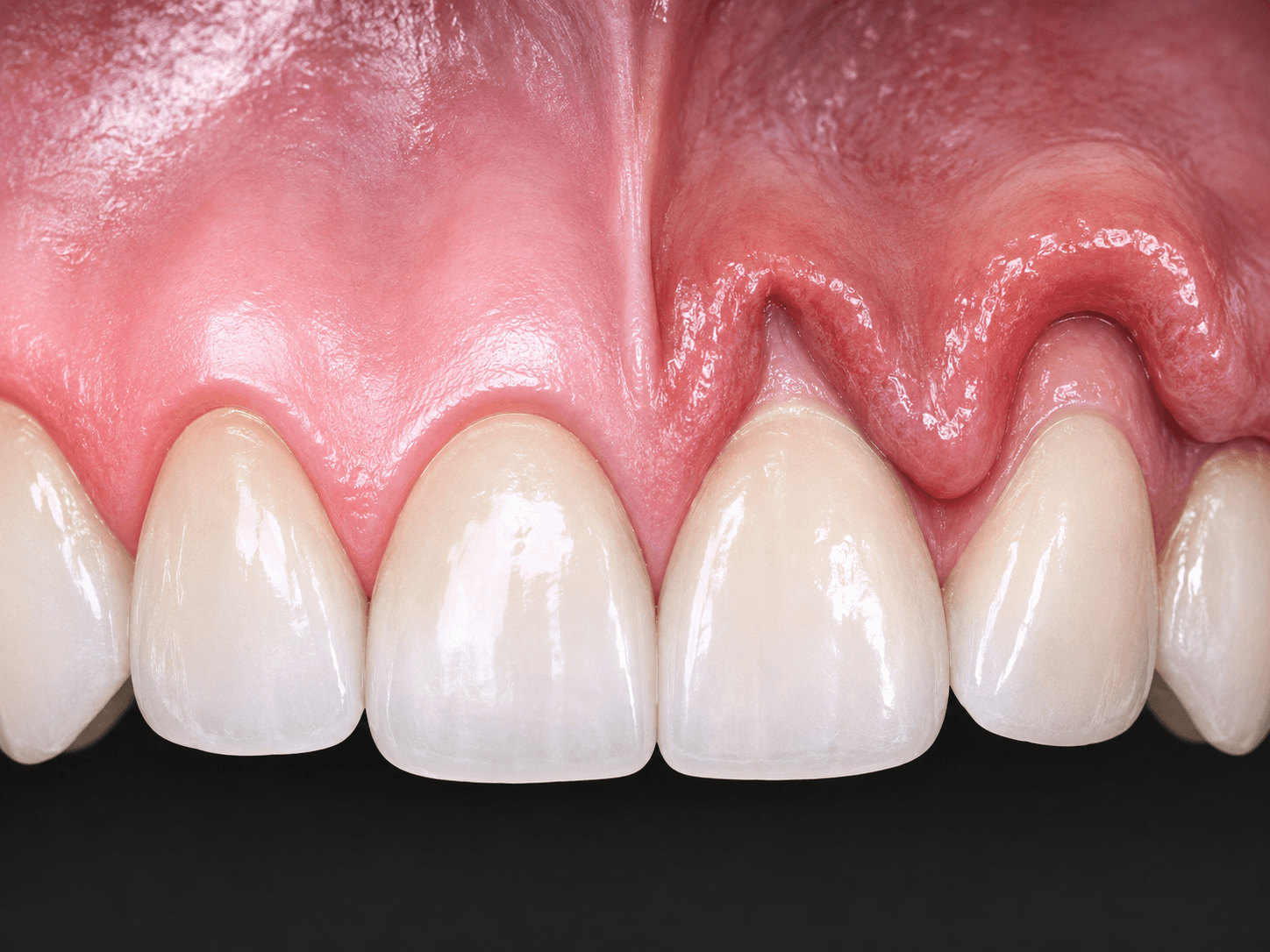
Stillman’s cleft is a narrow split, often V-shaped, that begins at the gum margin and extends toward the root of the tooth.
It is not usually an accidental wound. It is more often the result of repeated trauma or ongoing irritation in a specific area.
How does it form?
The main cause is repeated mechanical stress, such as:
- Brushing too aggressively
- Using hard toothbrushes
- Applying too much pressure while brushing
- Incorrect technique, especially forceful horizontal brushing
- Bruxism or tooth clenching
- Occlusal trauma
- Local chronic inflammation
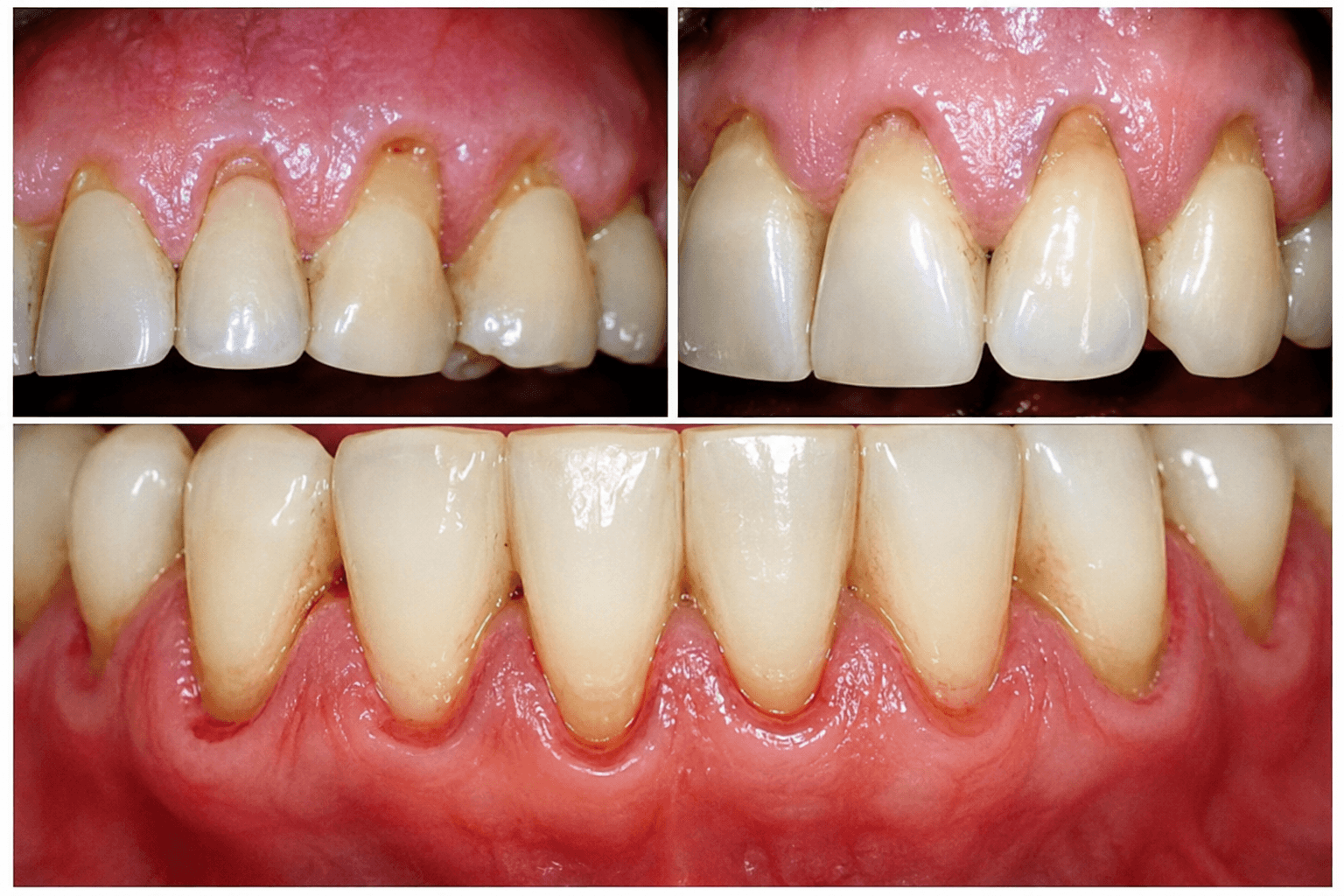
Over time, the gum loses elasticity, becomes damaged in a specific point, and may split or begin to recede.
What does it mean clinically?
Stillman’s cleft can be an early sign of gingival recession. If the cause is not corrected:
- Recession may progress
- The tooth root may become exposed
- Sensitivity to cold may increase
- Periodontal stability may be affected
Whitening, cleaning, or aesthetic treatments do not solve this problem if the trauma continues.
What does the patient feel?
Often there is no pain. A patient may notice only a change in appearance or mild sensitivity to cold.
That is why many people ignore it until the problem becomes more visible or more serious.
McCall’s festoon: thickening and folding of the gum
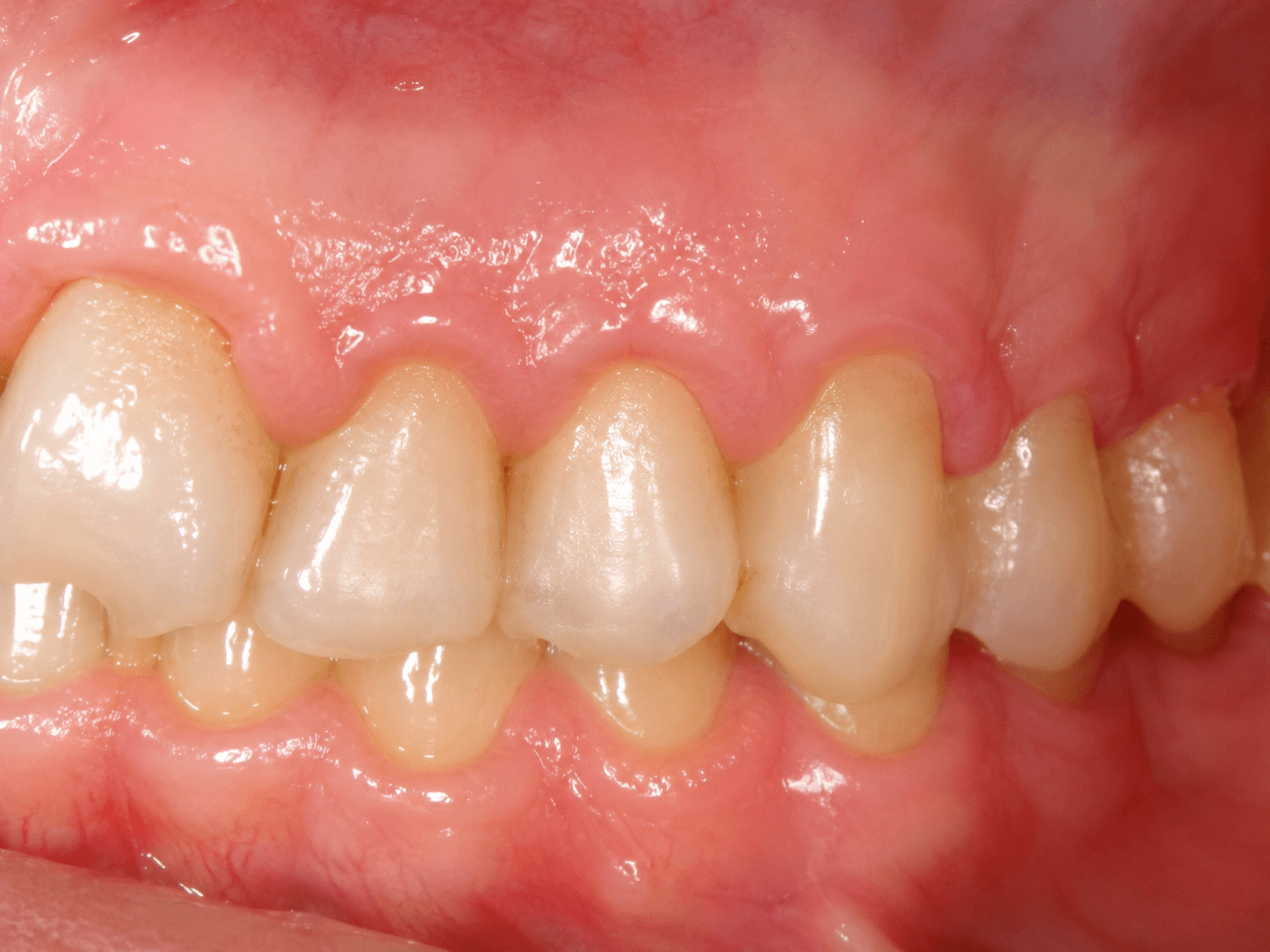
McCall’s festoon is a thickening of the gum tissue, with a rounded or folded shape, usually around the neck of the tooth.
Unlike Stillman’s cleft, the tissue does not split. Instead, it becomes swollen, thicker, and irregular in contour.
Why does it happen?
This change is mainly associated with:
- Chronic inflammation
- Bacterial plaque accumulation
- Inaccurate oral hygiene
- Irregular professional cleaning
- A brushing technique that does not clean the tooth-neck area well
The body responds by increasing the volume of the tissue and trying to protect the irritated area.
What does McCall’s festoon show?
McCall’s festoon may show that the gum has been irritated for a long time, that inflammation is persistent, and that there is a risk of periodontal problems.
Even if it looks soft and not aggressive, it is often a sign of long-term neglect rather than a temporary issue.
What does the patient feel?
Usually there may be:
- Gums that bleed easily
- A swollen feeling
- Sometimes bad breath
- Little or no strong pain
The absence of pain makes this change even easier to ignore.
Key differences between Stillman and McCall
| Stillman’s cleft | McCall’s festoon |
| Gum split | Gum thickening |
| V-shaped | Rounded shape |
| Often linked to mechanical trauma | Often linked to chronic inflammation |
| May be associated with gingival recession | Associated with swollen or thickened gum tissue |
| Risk of root exposure | Risk of periodontal problems |
Why are they important to recognize?
These changes matter because:
- They are warning signs
- They show problems before pain appears
- They can be corrected more easily when detected early
- They help prevent more complicated treatment in the future
Healthy gums do not split, thicken, or deform without a reason.
Educational message for patients
If you notice gum tissue changing shape, unusual cracks or thickening, or frequent bleeding, do not consider it normal and do not treat it only as an aesthetic issue.
A timely periodontal evaluation can make the difference between prevention and advanced treatment.